
Ceramic Glazes: Types & Effects
Glazes
in Ceramics
What glazes do, the different types – and why reactive glazes make each piece unique.

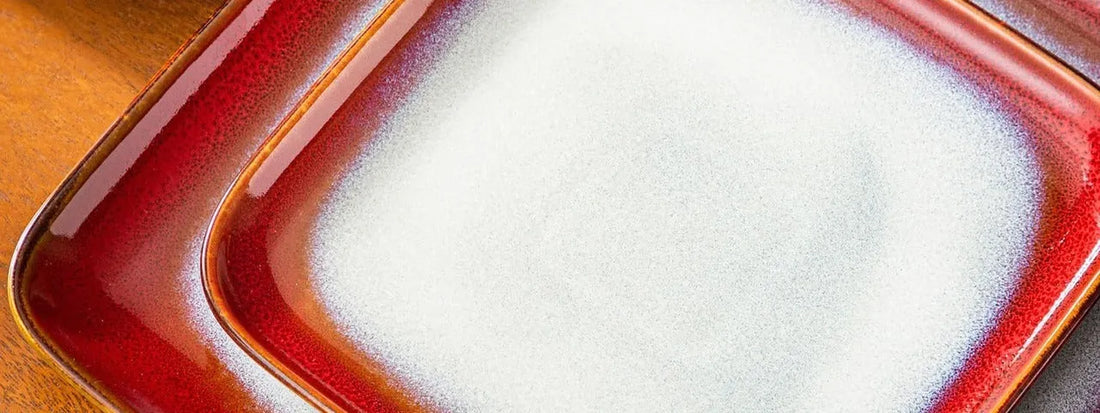
Reactive glaze at 1,200 °C – no pattern can be replicated.
Glazes are what complete ceramic tableware. They seal the porous surface of the clay, make the piece hygienically usable – and largely determine its appearance. Töpferkunst uses reactive glazes that create vibrant, unique surfaces during high-temperature firing.
The glaze is the soul of the piece. It decides how the fire reveals its work – and no kiln does it the same way twice.
What are glazes in ceramics – and what do they do?
Glazes are glassy layers of minerals and metal oxides that are applied to fired clay and permanently baked on during glaze firing at 1,200 °C or more. The result: a hard, waterproof surface, firmly bonded with the clay body.
In high-fired stoneware, the glaze is not a sticker. It becomes part of the piece – which makes Töpferkunst tableware dishwasher, microwave, and oven safe.
Sealing of clay pores · Food-safe surface · Protection against stains and abrasion · Aesthetics: color, gloss, and texture · Unique appearance with reactive glazes

Left, the unglazed bisque after the bisque firing – right, after the glaze firing at 1,200 °C.
What types of glazes are there – and which one suits which tableware?
| Glaze Type | Surface | Characteristics | Application |
|---|---|---|---|
| Gloss Glaze | Mirror-like | Clear, vibrant, easy to clean | Decor, coffee mugs |
| Matte Glaze | Velvety | Elegant, hides fingerprints | Modern everyday tableware |
| Satin Glaze | Subtle shimmer | Soft to the touch | Versatile dinnerware |
| Reactive Glaze | Organic, unique | Chemical reaction, not reproducible | Handmade stoneware |
What makes reactive glazes so special – and why is every piece unique?
Reactive glazes cannot be controlled – that is their essence. During firing at over 1,200 °C, the glaze begins to flow. Factors such as kiln position, atmosphere, and cooling rate influence the final result. These variables cannot be fully reproduced.
- Metal oxides as colorants: Iron oxide, copper oxide, titanium oxide react individually during firing.
- Layer application determines: Multiple glaze layers on top of each other enhance the chemical dynamics.
- Firing atmosphere: Oxidizing firing produces clearer colors; reducing firing brings deeper tones.
- Cooling rate: Slow cooling allows the glaze to crystallize differently.


The same glaze recipe, the same firing – two completely different surfaces.
Glazes are far more than just color. Töpferkunst relies on reactive high-temperature glazes that are not only beautiful – but also durable. Discover the Color Collection or the entire assortment.
Frequently Asked
Questions
Glazes are glassy layers applied to ceramics and fired. They seal the porous surface of the clay, make the tableware food-safe and waterproof, and determine the color, gloss, and texture of the finished piece.
Reactive glazes contain metal oxides (iron oxide, copper oxide, titanium oxide) that undergo chemical reactions with the clay during firing at over 1,200 °C. The resulting patterns – flowing marks, color gradients, organic structures – cannot be reproduced.
The main glaze types are: gloss glazes (mirror-like), matte glazes (velvety), satin glazes (subtle shimmer), and reactive glazes (chemical effects during firing, each piece unique). For everyday tableware, gloss and reactive glazes are the most common.
High-quality glazes on stoneware are fully food-safe and dishwasher-safe when fired at the correct temperature (over 1,200 °C). The glaze fuses insolubly with the clay body – there is no coating that can detach.
Glaze you can see and feel
Töpferkunst exclusively uses reactive high-temperature glazes – food-safe, dishwasher-safe, and each one unique.